Hazard Assessment
We structure work tasks by mechanical risk, chemical family, temperature, wet grip, electrostatic control, cleanliness and duration. The output is a glove need statement that procurement, safety and operations can review together.
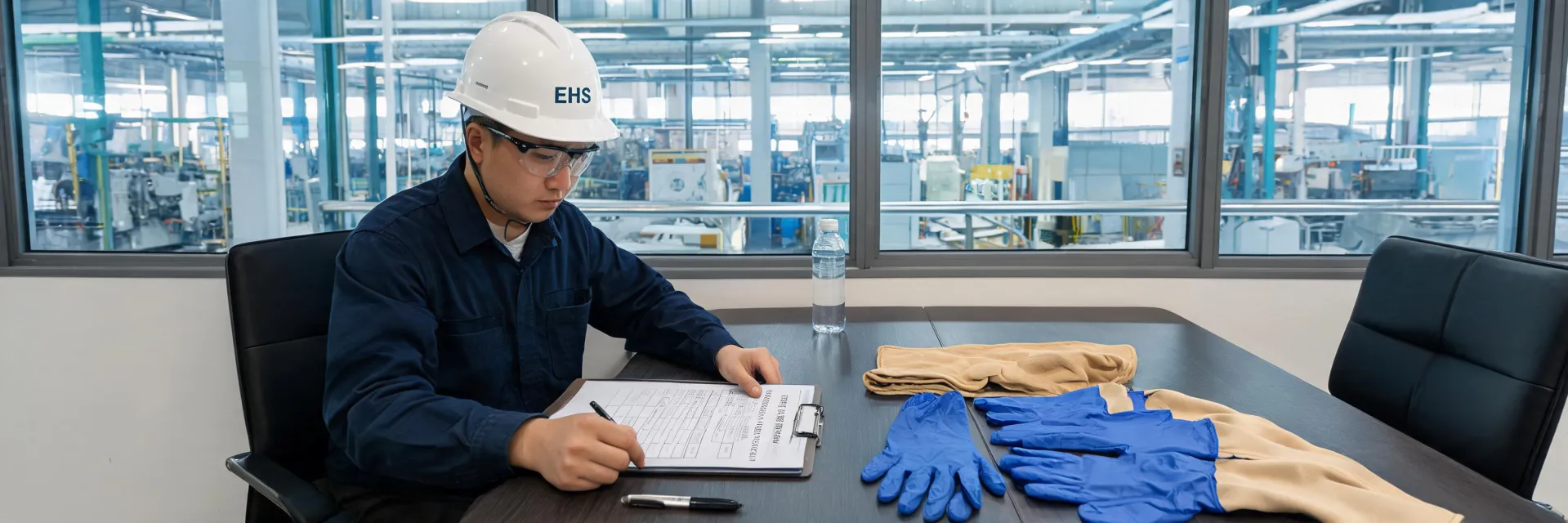
Program support is organized as a controlled process: define hazards, map standards, run field trials, then keep the documentation usable for audits and distributor execution.
We structure work tasks by mechanical risk, chemical family, temperature, wet grip, electrostatic control, cleanliness and duration. The output is a glove need statement that procurement, safety and operations can review together.
Selection notes explain ANSI/ISEA 105 cut levels A1-A9, EN 388 cut B-F, EN ISO 374 chemical symbols and disposable glove AQL language without implying universal protection across every task.
Field trial forms, wearer feedback sheets, size runs and distributor routing keep a glove change measurable. Supervisors can see which task approved the product and where exceptions remain.
Gather current SKUs, failure modes, exposure notes, cleaning agents, cut sources and production constraints.
Shortlist glove families with ANSI, EN and material evidence aligned to the task rather than only price or brand familiarity.
Document wearer acceptance, dexterity, chemical splash observations, snag points and replacement intervals in the real work cell.
Issue approved-use notes, distributor order guidance and review cadence so the program remains maintainable.
Useful starting points include a chemical name, SDS, metal edge type, current glove part number, cleanroom class, ESD requirement or complaint history. We translate those inputs into an initial review package.